As a guy who made a living writing my own words and editing the work of others, I am biased and I know it on the topic of reading.
So take this in that context: If you want to learn and get …
This item is available in full to subscribers.
To continue reading, you will need to either log in, using the login form, below, or purchase a new subscription.
If you are a current print subscriber, you can set up a free website account and connect your subscription to it by clicking here.
Otherwise, click here to view your options for subscribing.
Please log in to continue |
As a guy who made a living writing my own words and editing the work of others, I am biased and I know it on the topic of reading.
So take this in that context: If you want to learn and get smarter, read broadly with purpose and try putting your own thoughts down on paper. Yes, paper, even though you likely create content on a digital keyboard and computer. There’s something about printing it, holding it in your hand and reading it critically (especially out loud) that will make you better.
Occasionally, I use this space to chat with readers about books. At any given time I likely have two or three books going, switching back and forth as the spirit moves me. Not necessarily the best way to take it in, but it works for me.
Part of my reading purpose is to challenge myself with some scholarly material, pieces that can be a bit of a slog, while also rewarding myself with my preferred fiction genre, police procedurals and detective stories. That has a purpose, too. My first love in journalism has always been investigative reporting – finding and revealing the stuff the powerful and privileged want to hide. The best detective fiction is like a primer for folks who want to pick up investigative tips.
Writers do tend to drone on. Sorry. Let’s get to the point.
Today’s book is “Notes on Being a Man,” by Scott Galloway. Professor Galloway is a character. You may have seen him as a television talking head on one of several different programs. Galloway is an intellectual gadfly. His academic background is economics and his business career is marked by multiple entrepreneurial successes. As an author, though, he’s likely to tackle just about anything.
“Notes on Being a Man,” in my interpretation, alternatively could be called What’s Wrong with Boys and Men and How Can We Fix It.
Some key data points:
Shocking? There’s plenty more in the professor’s book. Most are not good.
I’ve heard Galloway, on television, put it bluntly. He says if, as a country, we want better young men – and one certainly hopes we do – then we need better older men. And we need them to step up as mentors.
I was born in the 1950s, matured through the turbulent 1960s and ‘70s, and became the father of two sons and one daughter. The cultural shift has been head-spinning. In my childhood the phrase was “it’s a man’s world,” and that was mostly accurate. Not good, not bad, just the times.
My generation broke a lot of things and saw plenty of social movements – civil rights, women’s rights, gay rights, skeptical of wars and government. You’ll hear no apologies from me. The old status quo – where people were supposed to “know their place” – needed to be broken, to truly democratize society and live up to the ideals set forth in the Declaration of Independence.
As a practical matter the best that can be said is it’s a work in progress. And among those struggling most are boys and young men, trying to figure out where they fit and how to express masculinity in a healthy way without cultural condemnation.
I agree with Galloway. If we want better boys we need to be better men. I never understood how males could father kids and then walk away. I understand divorce because I’ve been there. But when it includes abandoning kids it is inexcusable. Boys need men in their lives as helpful, healthy and tough-love role models. That should be dad’s job. But if dad takes a powder, somebody else needs to step up. Grandpa. Uncle. Family friend. Somebody.
No one – not Galloway, certainly not me – has all the answers. But this is a topic too often ignored. Boys who are not successfully socialized are often loose cannons. Or worse.
Galloway’s best contribution is to spark the conversation. Lord knows we, as a society, need to engage.
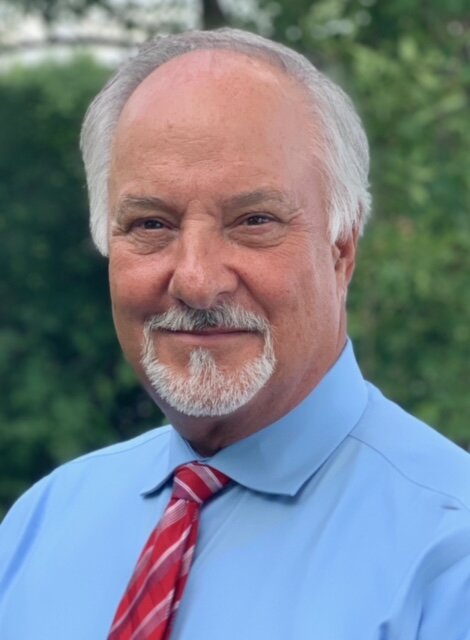
Bill Barth is the former Editor of the Beloit Daily News, and a member of the Wisconsin Newspaper Hall of Fame. Write to him at bbarth@beloitdailynews.com.