RIVER FALLS — The River Falls Plan Commission heard about a proposed Powell Avenue housing development and received a presentation on national, state, regional and local housing markets.
…
This item is available in full to subscribers.
To continue reading, you will need to either log in, using the login form, below, or purchase a new subscription.
If you are a current print subscriber, you can set up a free website account and connect your subscription to it by clicking here.
Otherwise, click here to view your options for subscribing.
Please log in to continue |
RIVER FALLS — The River Falls Plan Commission heard about a proposed Powell Avenue housing development and received a presentation on national, state, regional and local housing markets.
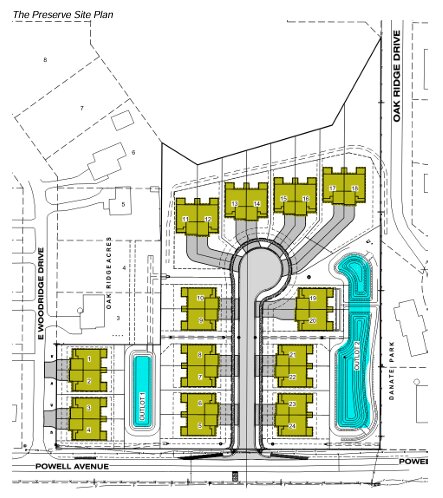
The development proposal is for 12 twin homes totaling 24 units. Twenty of the units would be accessed through a new branch off Powell Avenue, while the final four will be located directly on Woodridge Drive. City Council will review the plan during the July 22 meeting.
According to Senior Planner Harley Mehlhorn, the 7.2-acre area was annexed into the city in May and the Park Board voted to collect a fee in lieu of land for park dedication in June.
The developer agreed to pay a fee in lieu of park space, meaning the development will pay rather than having the required amount of green space due to its proximity to Collins Park. The developer also committed to constructing an enhanced crossing for Powell Avenue to Collins Park, to which Plan Commission Chair Diane Odeen asked what it would entail.
“The specific design is yet to be decided, but likely it will have some sort of illumination element. A flash when it is being occupied by a pedestrian crossing the road,” Mehlhorn said. “Likely some striping and signage as well.”
Community Development Director Amy Peterson presented a regional housing update to the commission, showing increases to construction costs and decreases to available housing in the state.
“Housing markets tend to be regional, not local,” Peterson said. “A lot of times we think about them as the city’s housing market, but because the job market is regional, the housing market follows it.”
Peterson said there are things the city can do through land use decisions to alter the market, but there are also things out of city control.
Households in Wisconsin continue to outgrow housing units, with some viewing a need for increased housing across the state to accommodate the growth. Despite the household growth, household size has decreased on average, with one and two-person households growing and three or more declining. Single-family and multi-family construction costs are up 41% each from 2020 at the national level.
“The construction and subdivision activity has not recovered from the Great Recession or even pre-recession times,” Peterson said of Wisconsin’s authorized building permits. “We’re making gains, especially in the multi-family market, but the single-family market and the platted lots… are still far behind 2020 levels.”
Average yearly total building permits were 6.78 per 1,000 population in Wisconsin from 1994-2004, and they sat at 3.67 from 2019-2024. Wisconsin is also facing “historically low” housing vacancy rates according to census data. Since 2019, home prices in the state have increased 56.6%.
Affordability ratio, which is the change between median household income and median sales price from 2013-23 has increased 40% in St. Croix and Pierce counties. For renters, the percentage of cost burdened has decreased by nearly 11% in St. Croix County, but increased half a percent in Pierce.
A St. Croix County Housing Study recently wrapped up, with median home sales price increasing from $175,000 to $366,000 and median rent increasing from $1,093 to $1,520 from 2013 to 2023.
“The national data showed a 41.5% increase in single family construction cost between January of 2020 and January of 2024, with a rapid increase between 2020 and 2022 before it leveled off into somewhat of a stable inflationary increase,” Mehlhorn said. “The River Falls data shows the biggest increase in the highlighted segment, that being from 2020 to 2022, with a 27% increase. If this trend were to have continued, the ultimate magnitude of increase would have eclipsed that of the national average.”
Mehlhorn said the average cost actually decreased from 2022 to 2024, leveling out to a 14% increase from 2020 to 2024. He mentioned the increase is not from construction costs decreasing, but rather shows the variability of construction types in River Falls.
“The pre-pandemic and pre-Great Recession numbers for Wisconsin was 6.7 permits per [1,000 population],” Mehlhorn said. “I’m happy to say in 2024 River Falls peaked at 6.3 permits per [1,000 population]. We’re actually, on a hyperlocal scale, relatively competitive with where the pre-financial crisis baseline was.”
One way Mehlhorn said the data can be used for good is ensuring zoning code meets policy vision to increase housing density and aid unit affordability.
“Secondly, the allowance of more missing middle housing in our R1 and R2 districts, as well as reducing the minimum lot size for single family residential development,” Mehlhorn said. “We’re seeing a common trend of small lot, large house.”
The missing middle Mehlhorn referenced is smaller scale, 2–5-unit developments that can fit within the “urban mesh.”