National Guard members can blast 200 mortar rounds in a given weekend, three to four times a year over the course of 20 years during training. While the training is necessary, the impact on the ears …
This item is available in full to subscribers.
To continue reading, you will need to either log in, using the login form, below, or purchase a new subscription.
If you are a current print subscriber, you can set up a free website account and connect your subscription to it by clicking here.
Otherwise, click here to view your options for subscribing.
Please log in to continue |
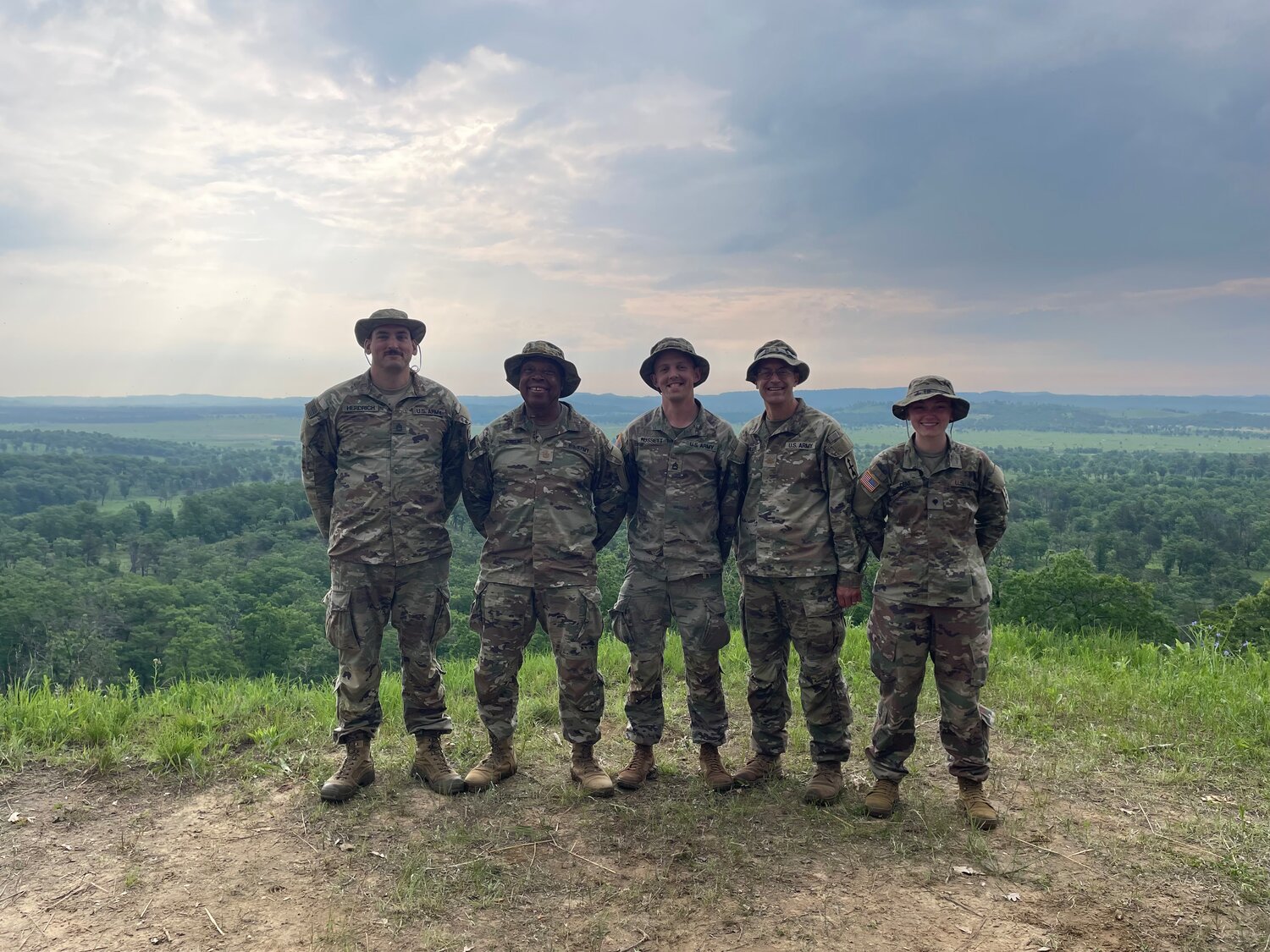
National Guard members can blast 200 mortar rounds in a given weekend, three to four times a year over the course of 20 years during training. While the training is necessary, the impact on the ears and brain is something researchers are attempting to mitigate.
Gregory Miller, a family physician in River Falls, has played a key role in this research since joining the National Guard back in 2021. Miller grew up in La Crosse and went to medical school in Milwaukee. After moving to Washington for some time, Miller moved back to the area where he has remained since 2000. He had interest in serving back in college during Desert Storm, but the opportunity was never right.
“That was kind of the trigger for me when I was in college and saw my friends, knew that they were in Kuwait serving the country,” Miller said.
With a marriage and two kids, it took until some of Miller’s work responsibilities lightened before joining in 2021.
“At that age it takes a long time to get in, but I made it in 2021. My goal was to do a deployment, and, interestingly, I ended up going to Kuwait for my deployment last winter,” Miller said.
When Miller got started, he was in the field for training at Fort McCoy. Curious to learn about different training happenings, Miller visited the mortar range to witness a mortar be fired.
“The noise, I wasn’t ready for it,” Miller said. “I went up to the mortar sergeant [Joseph Russett], just asked him if he had any questions and [said] I was medical, and he looked at me without missing a beat and said, ‘What are you going to do about my buddies who have been doing this for 20 years? They’re alcoholic, suicidal, depressed, can’t sleep and getting divorced.’”
It was a lot for Miller to process, but he made it a mission to find that answer. He called Karl Green, a neurosurgeon who joined on the same day as Miller. The two have since looked into how blastover pressure exposure from shooting off mortars can rattle the brain.
“Maybe a little bit more subtle than an obvious concussion, but if you do that 200 times in a weekend, it makes a difference,” Miller said. “If you do that three, four times a year for 20 years, that can have, potentially, long term effects is what we’re worried about.”
Miller said the weapons themselves are not the issue, but they instead need to find a way for them to be safely fired for decades without permanently damaging the users. He said the people firing the mortars are usually retiring in their late 30s, and the goal is to allow them to return to a normal life with their families.
“It took a long time to get going. I’ve been working on it for three years,” Miller said. “It was amazing because we connected with Walter Reed Army Institute of Research, which is an amazing place, and we were able to get nine researchers.”
The researchers then collected and analyzed data on the mortar operators. The goal is simple: make life easier for people who are risking their lives for the country.
“That’s the goal. That’s why you go into medicine,” Miller said. “I basically tripped on this, and I had no idea that would happen… Bringing them back is good, but we’ve got to bring them back whole.
“These kids deserve this,” Miller said. “They’re putting themselves out there to protect us, and they’re young enough that they don’t understand the risks they’re taking with all these mortars and all the things they’re doing. It’s incumbent on us to make sure that we keep them safe as well since they’re working hard to keep us safe.”
The work is far from over, but Miller and the rest of the crew working on solutions are not going to stop until they have completed their goal.