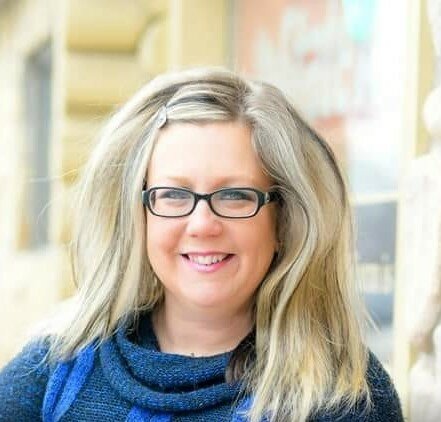
Mental health. It’s not just a catch phrase or a trend. It’s something we all need to take care of, which seems tougher and tougher right now. I bet some of you can relate.
Last …
This item is available in full to subscribers.
To continue reading, you will need to either log in, using the login form, below, or purchase a new subscription.
If you are a current print subscriber, you can set up a free website account and connect your subscription to it by clicking here.
Otherwise, click here to view your options for subscribing.
Please log in to continue |
Mental health. It’s not just a catch phrase or a trend. It’s something we all need to take care of, which seems tougher and tougher right now. I bet some of you can relate.
Last Sunday I had what some might call a meltdown. Not a temper tantrum, but an utter mental break that dissolved me into a mess of blubbering tears. I was completely overwhelmed and felt like my body had electricity zipping through it. I was on the verge of a full-blown panic attack, which I’ve had before, and it was a horrible feeling.
Two items in the paper this week talk about mental health: The Farmer Angel Network picnic honoring Brian Webster’s memory and Robin Boles’ Sustainability Matters column about the power of saying “no.” Both pieces impacted me greatly. They also made me realize that too often we push conversations about mental health to the side, bury them under a rug or ignore them completely. We can’t do that anymore. Which is why I’m sharing this story.
I was crying on Sunday for many reasons, that all punched me in the face at once that day. My husband’s grandmother went into hospice with kidney and heart failure. He was raised by his mother and grandparents (like me!), so she is more like a mother to him than grandma. Because of this devastating news, which prevented most of Shane’s family from coming to our son’s graduation party, our son asked us to cancel the party. No one felt like celebrating and luckily, he had had a party with his mom’s side of the family and classmates already. My heart aches for the whole family, especially Shane. She is our last grandparent living. Losing her closes the chapter on a generation.
Secondly, it was a day that I could do nothing right for anyone. My teen daughter’s disdain for me was in full force. My teen stepsons were the same way, belligerent as all get out because we dared ask them to get out of bed before noon. My husband, who was understandably upset over his grandmother, was snappish about my busy schedule and my not spending enough time at home.
I understood his annoyance, because we were trying to figure out a time to go see his grandma, and every day was booked. Between work, shuttling kids to practices and tournaments and my mom to multiple medical appointments, time is non-existent for us. With his grandma now in hospice, and her two children gone before her, we are tasked with cleaning out her house and camper property, getting it ready to sell. This is made more difficult by the fact that both places are more than three hours away. We are also in the middle of that with my own mother’s home, though we have my aunt’s amazing help with that. I’ve also been working two jobs (the second almost full-time too) to pay off the mountain of medical bills my three surgeries and autoimmune appointments and medication have accumulated.
Something had to give and that day, and it was me. I shut myself in my bedroom and let it loose. I hadn’t cried like that in a long time, and by the time it was done, I was drained. I fell asleep with my husband, who came into the room to comfort me, God bless him, just sitting beside me and listening.
When you’re young, people always warn you that being an adult is hard. They talk about leaving home and making your own way in the world or becoming a new parent. Both are definitely challenging. But they never prepare you for being part of the “sandwich generation.”
According to Mental Health America, the term “sandwich generation” refers to young to middle-aged adults who are simultaneously raising children and supporting their aging parents. About a quarter of U.S. adults (23%) are a part of the sandwich generation. It can be exhausting, emotional and expensive. I struggle with finding enough time to take care of my kids, complete my work to my satisfaction, manage our household, plus provide my mom transportation to her constant medical appointments, help with managing her finances, shopping and emotional support. I often long for siblings that could help, but my husband and I are only children. I want to make everyone happy, my kids, my mom, my husband, and I often feel like no matter what I do or try, someone will be upset with me for not having enough time. That hit my like a ton of bricks that Sunday. Plus I was completely, physically exhausted with trying to do it all.
Ultimately, I think it was a good thing. It broke the ice on a conversation that was a long time in coming between my husband and I. I can’t do it all, not alone. I need to give myself grace. I need to take time for myself and sometimes say “no.” I need to share my story with other and listen to theirs, because that is how we heal.